
Contractor Training Portal
Access the full Alchatek contractor training library.
Access the full Alchatek contractor training library.
Every system on Alchatek's high-pressure injection rig — generator to gun tip. Power-up, the PMC control panel, the PHX-40 proportioner, hose heat and FTS diagnostics, MixMaster Pro setup, live injection, waste handling, shutdown, and the field troubleshooting that keeps a $100K+ rig earning. Combines the full Equipment Masterclass and the Injection Trailer review into one course, taught by Colt, Alchatek Technical Training.
After this module, you'll be able to power up the rig in the right order, read the control panel and pressure gauges, set up and water-verify the MixMaster Pro, run a controlled injection, shut the system down correctly, and diagnose the pressure, supply, and hose-heat problems that account for nearly every rig service call.
The rig is a self-contained mobile injection plant. Inside the trailer: a diesel generator (with a guarded fan — mind the "NO LOOSE OBJECTS" warning), a Rolair compressor feeding a blue refrigerant air dryer, drum racks for both materials, and the PHX-40 hydraulic proportioner (Polyurethane Machinery Corporation) that meters and pressurizes the two components before they travel down the heated hose to the MixMaster Pro gun.
Everything is color-coded end to end: A-side is red and carries ISO; B-side is blue and carries resin. Red drums, red labels, red plumbing; blue drums, blue labels, blue plumbing. The coding exists to make cross-connection nearly impossible — respect it when you re-plumb anything.
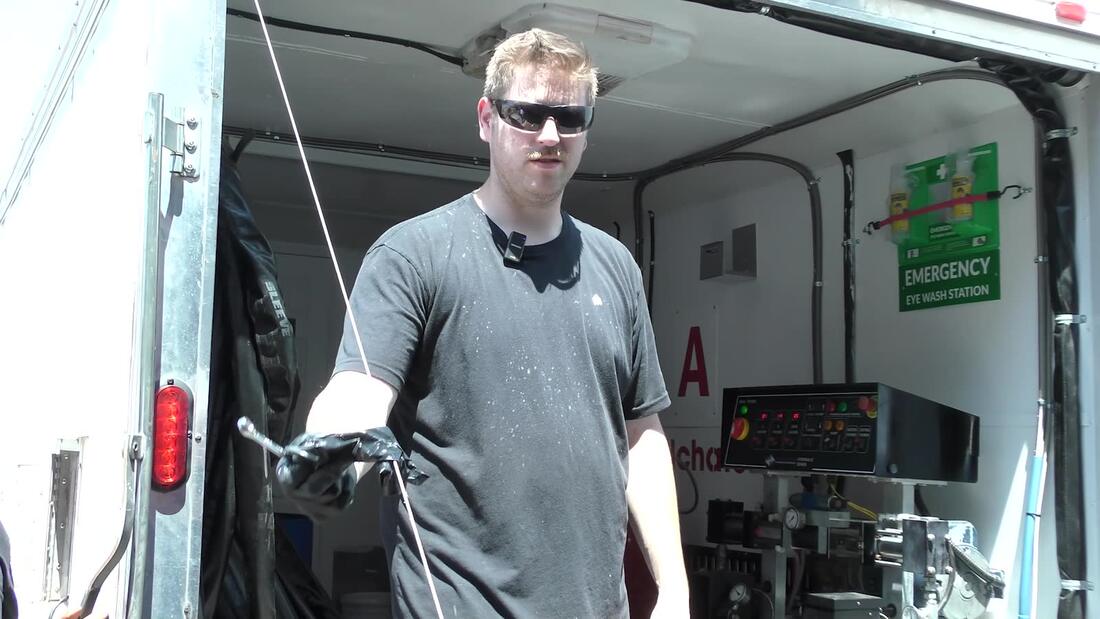
Safety equipment lives inside the rig: fire extinguisher, first aid kit, and an emergency eye-wash station mounted above the control panel. Know where all three are before you need them.
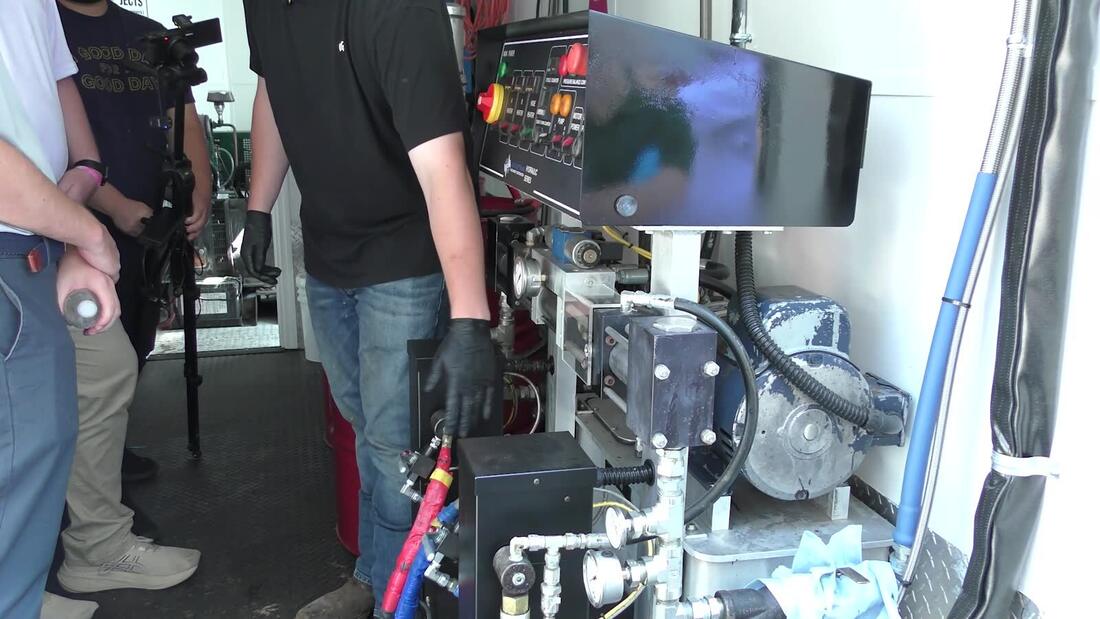
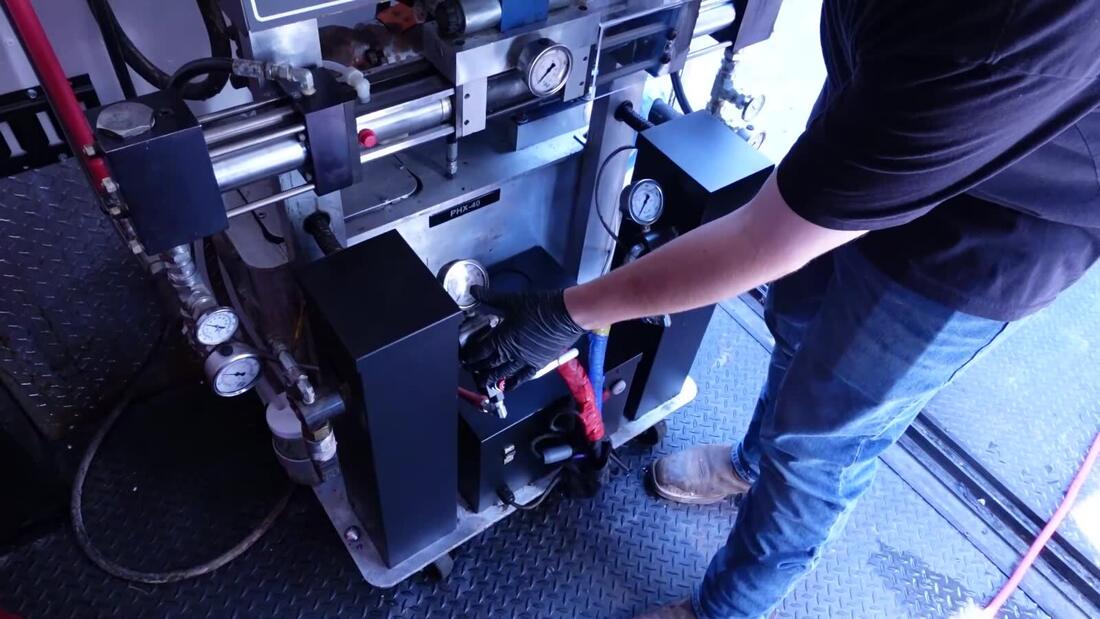
Stainless-steel air-driven drum pumps sit in the drums and feed each side. Material enters the PHX-40 through ball valves, past the Y-strainer, and registers on the inlet pressure and inlet temperature gauges before the piston strokes it down the hose. Supply pressure from the stick pumps runs roughly 115–200 PSI — that's all the feed pressure the proportioner needs.
Two checks tell you everything about how a rig has been treated. First, the Y-strainer — the inline screen ahead of the proportioner on each side:
A clean strainer means clean supply. A strainer packed with debris means crystallized material is moving through the system — and the hoses are probably part-blocked too, which is why that contractor keeps burning through injectors.
Second, the pump lube. The lube system sits behind the reactor and keeps ISO from setting up in the pump. Fresh lube (LW-197) looks clear or slightly milky. As it absorbs ISO it darkens and thickens — gelled or pink means overdue; a rock-solid lube bottle means the rig isn't being maintained at all — treat every other system as suspect until proven otherwise. The system is self-priming: dump the old bottle, fill with fresh, done.
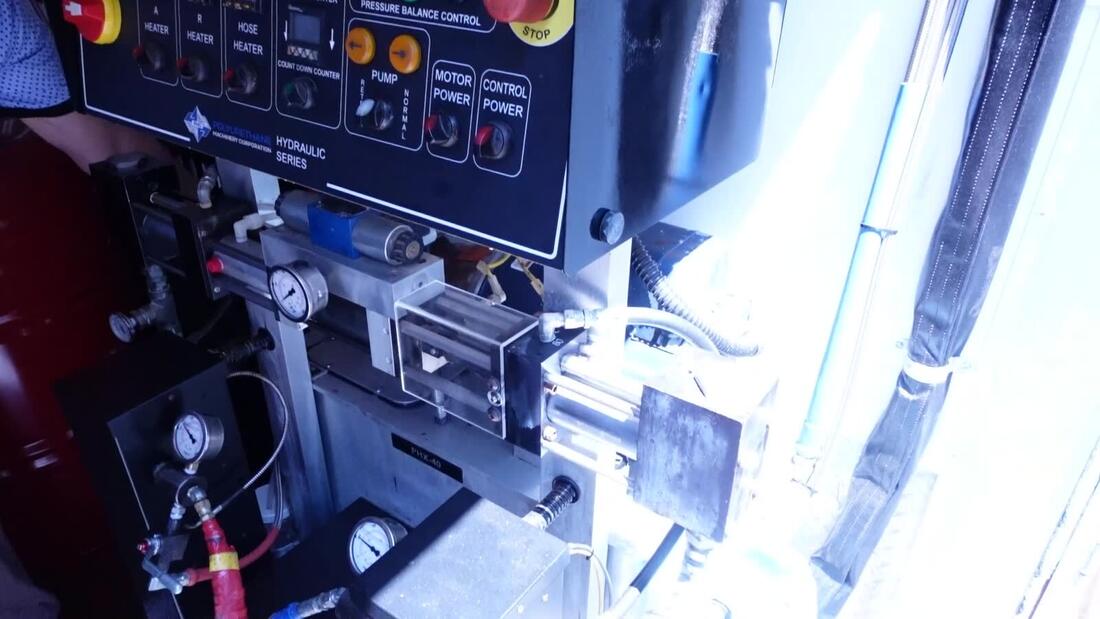
The PMC Hydraulic Series panel is the rig's nerve center. Left to right, know every control: MAIN POWER (yellow rotary), A / B / HOSE heater controls with digital temperature readouts, CYCLE COUNTER (with countdown mode for batch work), PRESSURE BALANCE CONTROL (dial, 300–700 range, with OFF and RESET), PUMP RETRACT/NORMAL, MOTOR POWER, CONTROL POWER, and the red EMERGENCY STOP — which is for emergencies, not routine shutdown.
Below the panel, the PHX-40's dual fluid gauges are your real reference: run standard injection work at 1,250–1,500 PSI, and before any job confirm temperatures are up — at least 70°F, with the B-side target around 80°F (warm material around 100°F on a running rig is normal). The hydraulic adjustment knob lives on the backside of the machine: clockwise raises pressure, counterclockwise lowers it — and you watch the fluid gauges while adjusting, not the hydraulic ram gauge.
The heated hose is its own electrical system, and when hose temperature misbehaves there are exactly three suspects: the black power wire, the transformer, and the FTS cable.
The MixMaster Pro is a water-purge injection gun: a water line runs to the gun block so you can flush the mixing chamber on demand. That makes water your first checkpoint:
Drill your holes, then verify each one with a water burst — if you drilled through, water comes out the far side. No water through means a blocked or short hole, and finding that out with foam costs a gun.
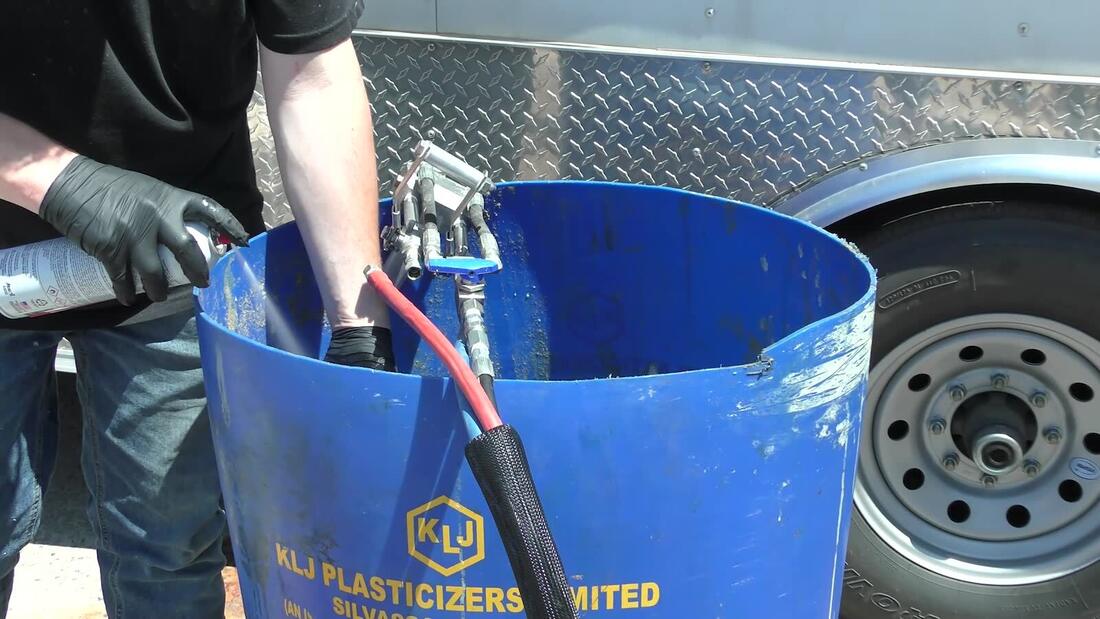
Housekeeping: B-side drips clean up with brake cleaner. And the purge water amount is tiny when you're doing it right — don't let water-in-the-ground worries talk you out of purging.
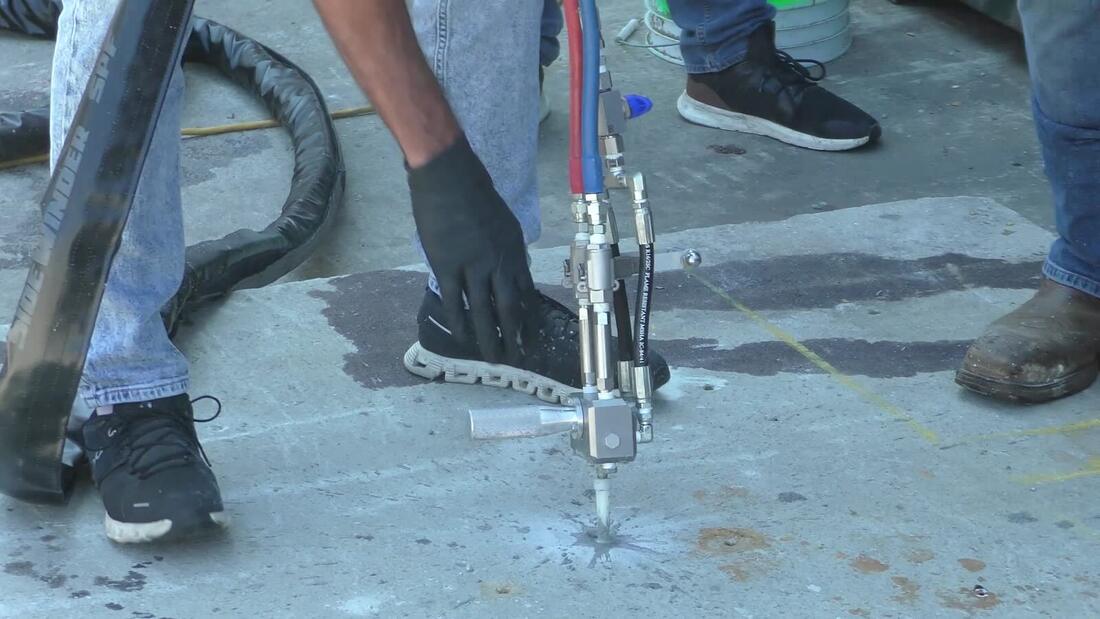
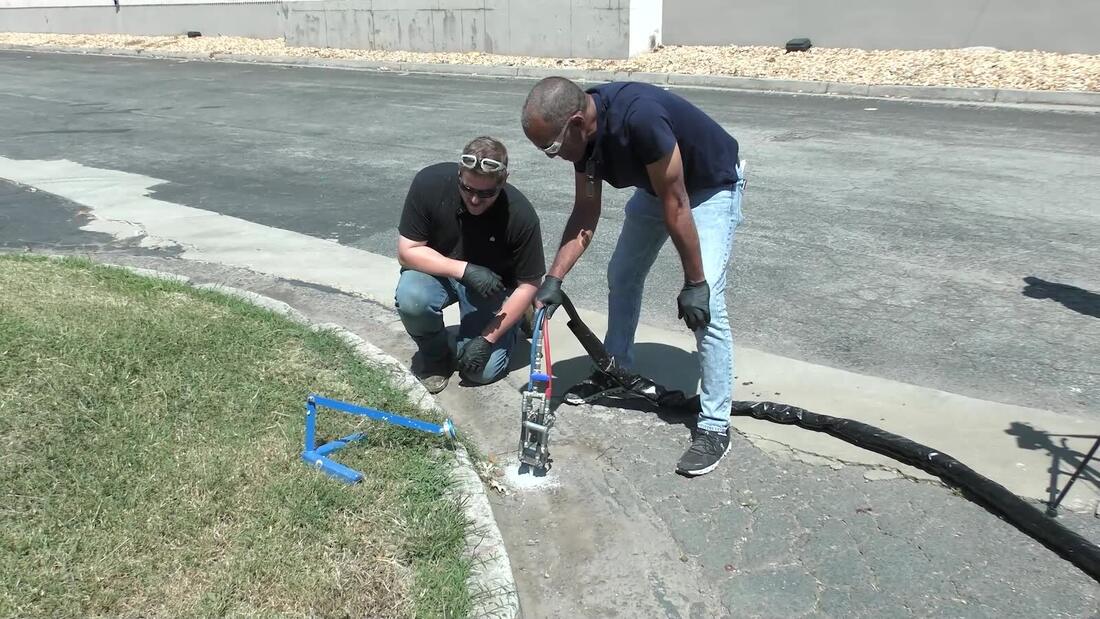
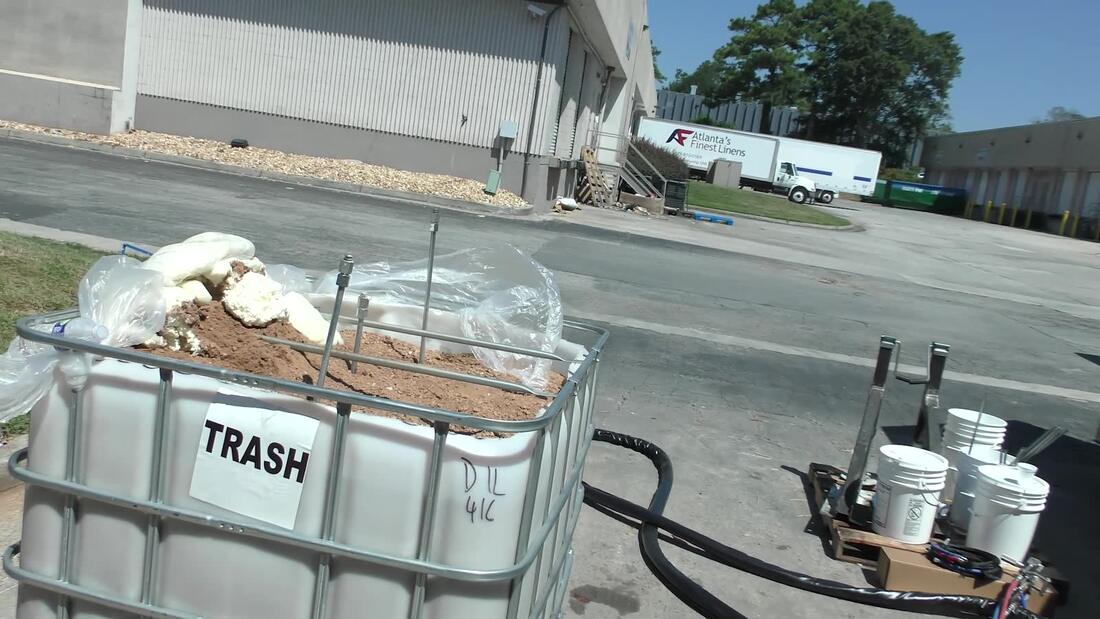
The waste protocol is simple and non-negotiable: an IBC tote, labeled TRASH, travels with the rig. Test shots, purges, and gun clearings all go into the tote — never onto the customer's ground, and never into a random bucket that ends up tipped in a truck bed.
Almost every rig problem is a pressure story. Read the two fluid gauges and work the list:
Score at least 4 of 5 to unlock module completion.