
Contractor Training Portal
Access the full Alchatek contractor training library.
Access the full Alchatek contractor training library.
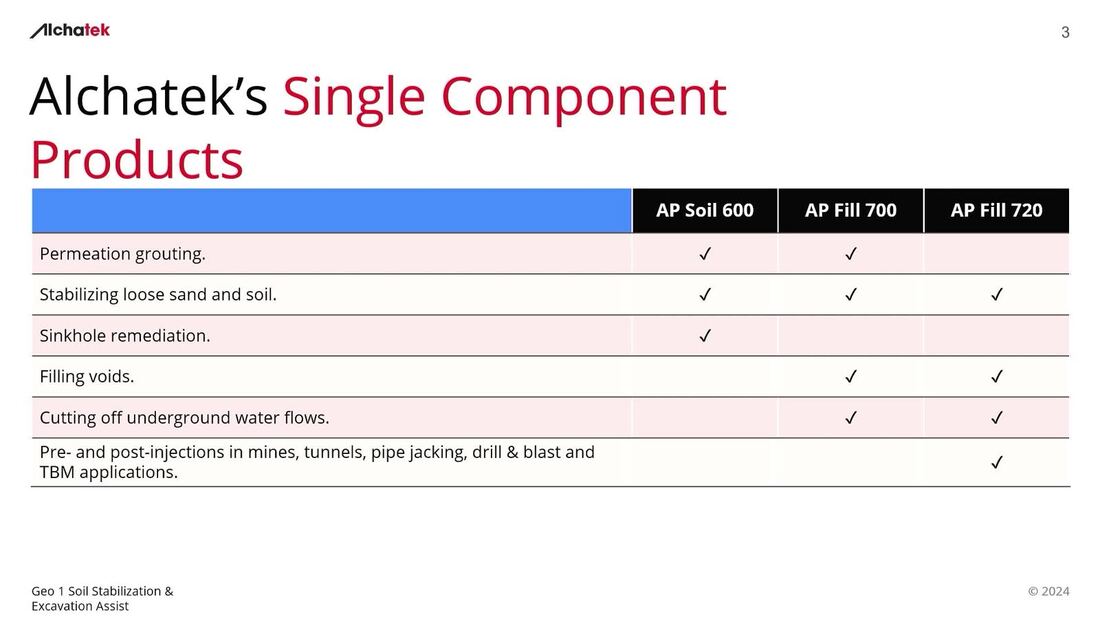
The single-component playbook: choosing between AP Soil 600, AP Fill 700, and AP Fill 720; the install parameters that make columns instead of fence posts; excavation assist that replaces sheet piles; and curtain wall grouting from the ground to the basement wall.
After this module, you'll be able to match the right single-component resin to the soil and the problem, set spacing/catalyst/pace so the material permeates instead of channeling, sell and execute excavation assist against traditional shoring, and run a curtain wall job from layout to artesian shutoff.
Four jobs make up most soil stabilization work: embankment stabilization, erosion remediation, sinkhole stabilization, and strengthening deep weak soil strata. Behind most of them is the same villain — the infrastructure erosion cycle: a leaking storm or sewer pipe below the water table slowly carries soil away, voids grow, and the road or slab above eventually fails.
Excavation assist is the growth application — chemical grouting as a replacement for sheet piles and trench boxes where traditional shoring physically can't go. What used to be a novelty is now a monthly occurrence.
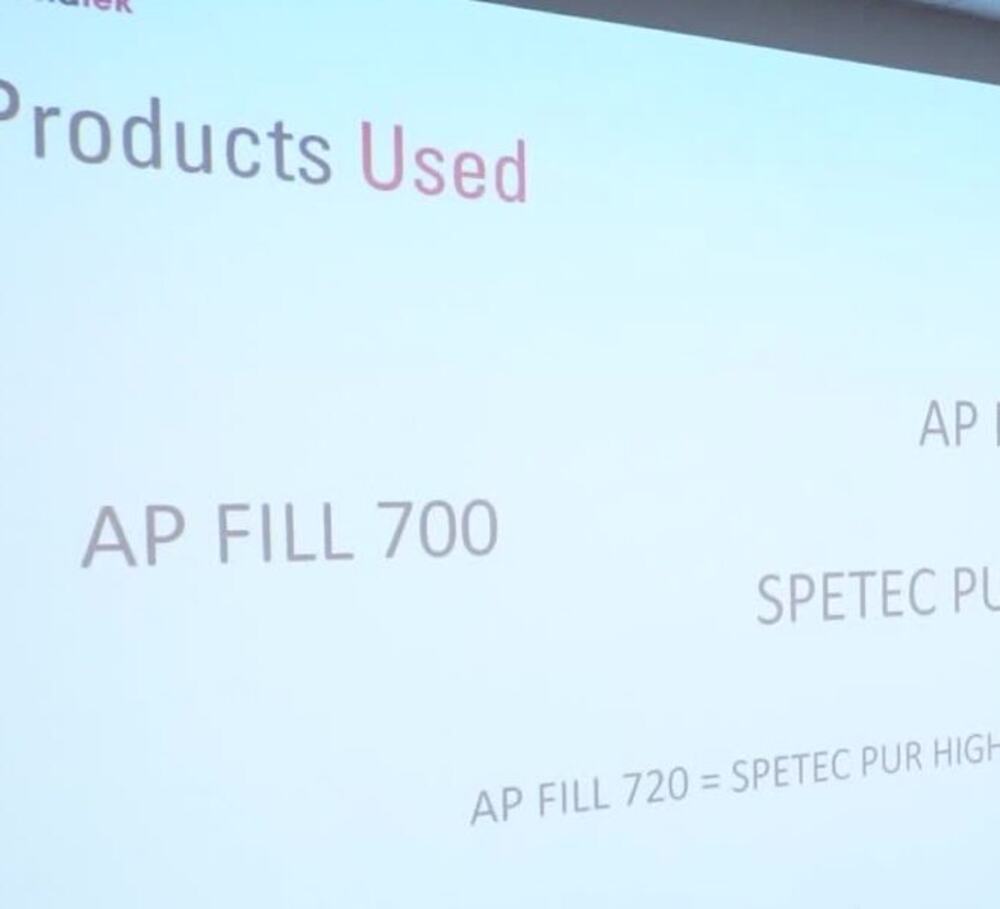
Why this course leans single-component: for permeation work, the line is deep — three distinct viscosity grades (600 / 700 / 720) instead of the one or two grades typical elsewhere in the market. More grades means a closer match between the resin and the soil in front of you — which is exactly what makes correct product selection a skill your customers will pay for.
Equipment: the PolyShark (and the Titan 440 before it) is the single-component workhorse — see the PolyShark Masterclass. For big tote-on-tote jobs, step up to the proportioner; the most anyone's pushed through a single rig in a day is about 600 gallons.
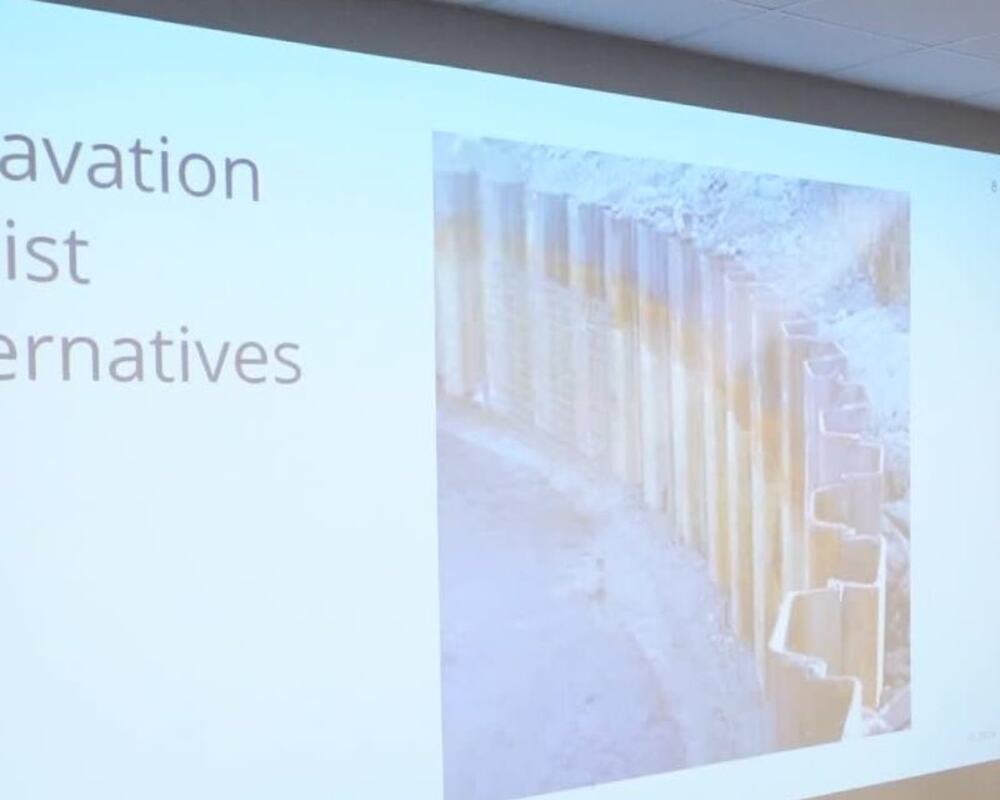
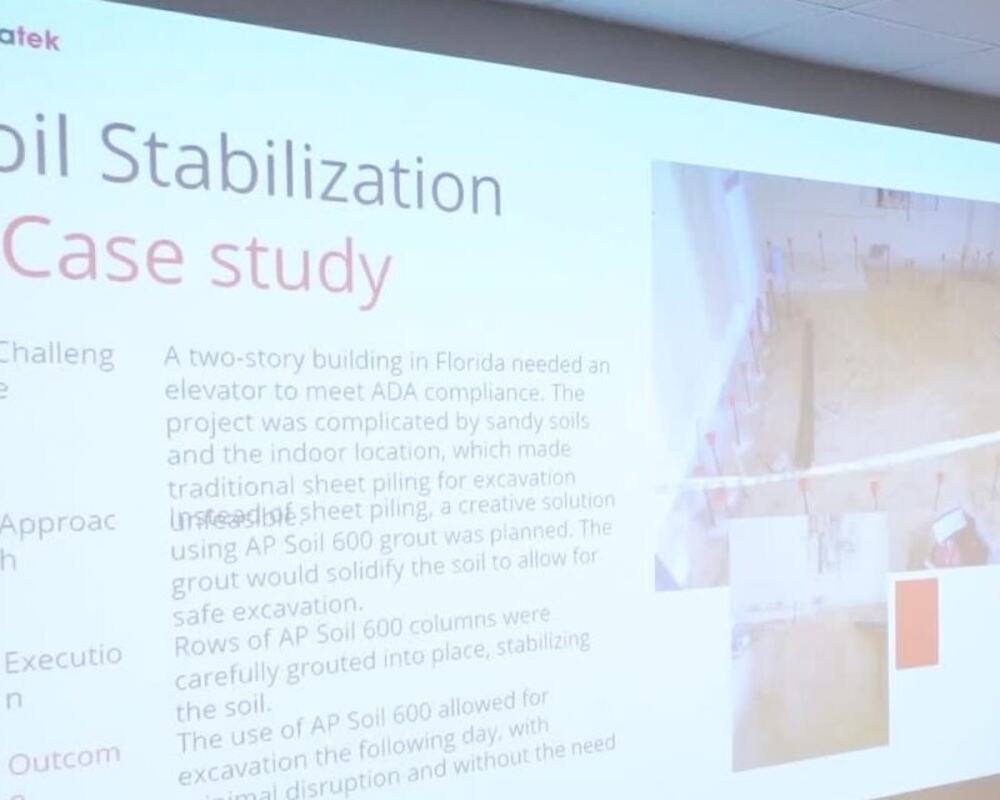
The landmark job: a two-story Florida building needed an elevator for ADA compliance. The shaft pit had to be dug inside the building — sandy soils, and no way to bring sheet piling through a set of double doors. The answer was Alchatek's first excavation pit: AP Soil 600 columns grouted around the dig perimeter to solidify the soil into its own shoring.
When they excavated, the columns stood as a visible, continuous perimeter wall. The counter-example from another crew: pumped too fast, and the "columns" channeled upward — fence posts with nothing at depth. Same product, same soil; pace made the difference.
Jet grouting is the heavyweight alternative: $3–4 million machines mixing portland cement slurry into the soil at 8,000–10,000 PSI, producing soil-cement columns. The slurry is cheap — the operation isn't; figure on the order of a thousand dollars an hour once the equipment mobilizes.
Three flavors of curtain: ground curtain walls (a grouted barrier in the soil), wall curtain walls (behind basements and bridge structures), and floor curtain walls (against hydrostatic pressure from below). The product is AP Fill 700 first, or 720 when sealing power matters more than travel.
Score at least 4 of 5 to unlock module completion.